March 8 Film Screening Program at Kino Armata
03.03.26
News
This film program brings together a selection of feminist documentary and experimental films spanning different geographies and historical moments. Across these works, directors and protagonists insist on full and joyous lives, bear witness to the violences of settler colonialism, and make visible the structures of power that relegate domestic, migrant, and sex labor to the margins of both our and the camera’s vision. With this program, we hope to reconnect audiences to the revolutionary roots of International Working Women’s Day, roots that are often overshadowed by a more depoliticized human-rights narrative, one that risks leaving global systems of sexism, racism, colonization, and other interlocking forms of oppression unexamined.
This program is deeply indebted to the generosity of Another Screen, a non-profit feminist film platform and journal. Through their support, Kino Armata was able to view, select, and acquire films from previously and thoughtfully curated feminist programs. We encourage you to follow their work and to donate if you are able; Another Screen exists entirely thanks to the voluntary labor of its staff.
March 6th:
The Turtle’s Rage (2012) by Pary El-Qalqili
The Turtle’s Rage explores the pain of exile through the generational conflict between a Palestinian father and his daughter. Told through non-linear storytelling, the film moves between conversations in their Berlin home and journeys to Palestine. We see them arguing at the airport, bargaining with taxi drivers, buying fruit from street vendors, and making disappointed phone calls to family members when arbitrarily turned away at the border in Egypt.
The film reflects on how historical injustice is grieved, remembered, narrated, and withheld. In doing so, recounting violence emerges as a deeply gendered practice. Through emotional restraint, Musa stubbornly articulates exile as a collective predicament rather than a personal wound. Yet, his turtle’s rage does not only signify withdrawal. It is a protest. A protest of grief and rage as a refusal to move on; to normalize colonial violence, displacement, and loss of one’s homeland. In addition, the documentary features testimonies from the director’s relatives in Palestine, women who recount their experiences of the Nakba, its enduring legacies, and the painful acceptance that return may never come. In this film, it is Palestinian women who carry memory across generations; those who carry stories of loss and resistance, hope and defeat, exile and return. The Turtle’s Rage asks us to confront both the intimate and collective violence of settler colonialism, border regimes, and forced displacement. It asks us to witness Musa and Pary in their grief, rage, and yearning for mutual recognition and return to Palestine.
March 7th:
Ali in Wonderland (1975) by Djouhra Abouda & Alain Bonnamy
Ali in Wonderland renders visible the condition of Algerian immigrant workers in Paris in the mid-1970s. The film presents a sobering critique of exploitation and racism in the European metropolis, situating the French state, colonization, capitalism, and the media as primary systems that engender and perpetuate racialized oppression. In this experimental essay, every aesthetic choice is a means to a political end, making visible and audible the immigrant worker, a figure completely absent from the experimental cinema of the time. As the frame captures immigrant workers working in the street, an Algerian man recounts his personal story of migration marked by racism, humiliation, and longing for his homeland. Importantly, the director is not simply serving a political cause from a distance but is herself a child of the immigrants she represents. Indeed, her film is a political protest rooted in her own lived experience and anger vis-à-vis oppression.
Ali in Wonderland confronts the enduring legacies of colonialism in mid-1970s Paris, bringing into view the lives of Algerian men and women whom the French exploit for their labor but never fully and meaningfully recognize in their own terms. From our own location, as we navigate socio-economic, geo-political, and ecological crises globally, this film urges us to examine the systems that conscript us into dehumanizing migrant workers and racialized communities locally, whose labor is indispensable yet actively rendered invisible in similar ways.
March 8th:
Spanning various geographies, the following films foreground the global struggle against the patriarchy, capitalism, and racism. Whether in the olive fields and factories of Italy, exercising studios of New York City, or red-light districts of Brazil, these films are a testament to the historical vitality of women who have theorized, worked, organized, and insisted on living full and just lives– in their own terms.
Being Women (1965) by Cecilia Mangini
Being Women is an emblematic documentary film that forged a pathway for the feminist movement in Italy and beyond. Through this film, Mangini contrasts highly sexualized images of women on advertisements with the testimonies of mothers and workers who grapple with the gendered demands of patriarchy, capitalism, and religion. Being Women, a film commissioned by Unitelefilm, a Communist-aligned production company, features a series of interviews conducted by Mangini with women workers from the olive fields of Puglia to the factories of Milan. Captured working at home, the factory, and in altercations with the police, the women in Mangini’s frames interrogate a variety of class and gender issues, including motherhood, housework, abortion, unionisation, and boycotts.
Fannie’s Film (1981) by Fronza Woods
Fannies Film is a short documentary about a 65-year-old woman working as a cleaner for a professional pilates studio in New York City. In this film, we follow Fannie as she cleans and narrates the story about her childhood, marriage, work, hopes, goals, and feelings. Set in the 1980s, Fannie’s Film posed a challenge to mainstream representations of black domestic workers, presenting a complex and joyous portrait of an individual whose labor, livelihood, and inner world oftentimes get overlooked.
Street Lovers (1994) by Eunice Gutman
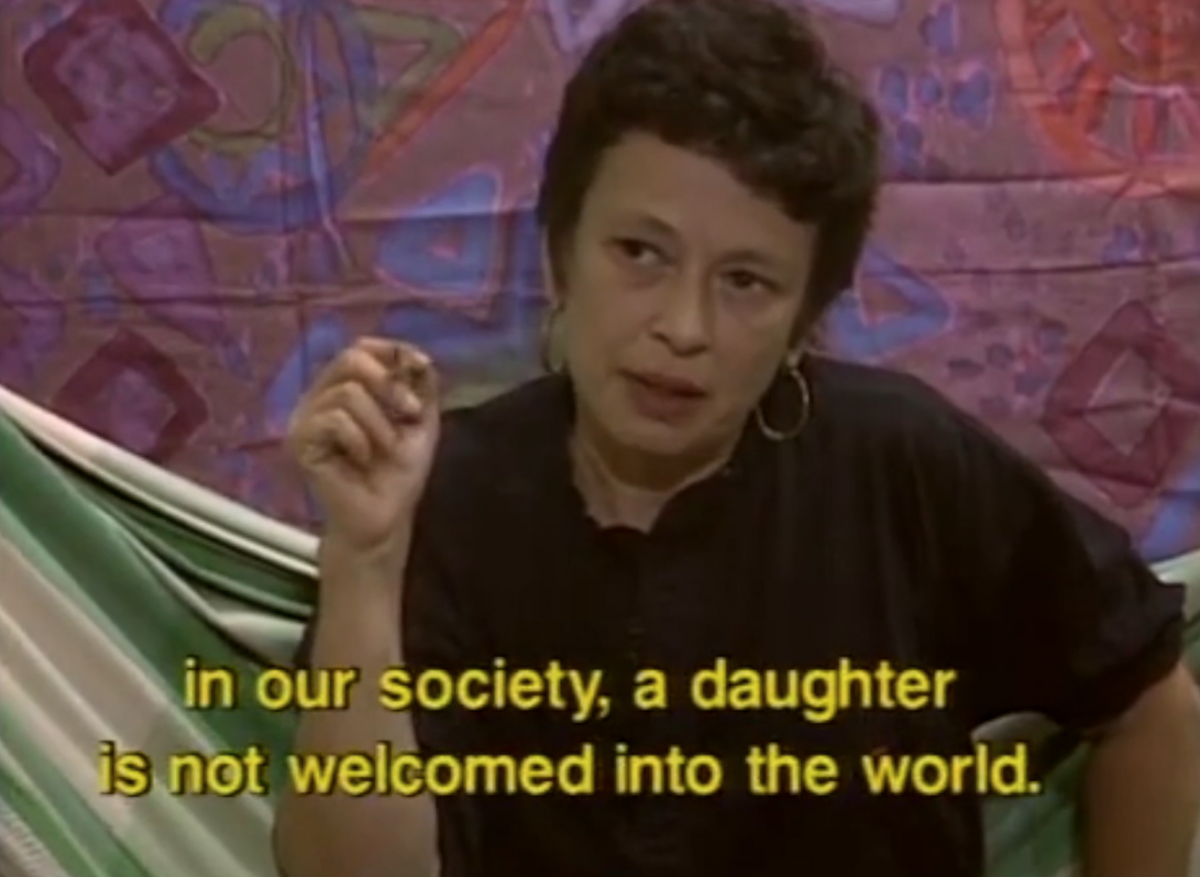
Set in Brazil, Street Lovers is a short documentary urging us to question dominant sensibilities towards sexuality and labor in a context and time where sex workers fought for the right to citizenship. The film features the testimonies of sex workers, transgender women and activist representatives from various advocacy groups, taking us through Vila Mimosa, Praça Mauá and erotic nightclubs. Through the protagonists, we are urged to contend with the complex and nuanced realities of sex work through the eyes of sex workers themselves and their ideas about agency, work, and sexuality.
-