I Was Pressing Bricks in My Dreams Last Night - Adoption and Nine Months by Márta Mészáros at Kino Armata
17.02.26
News
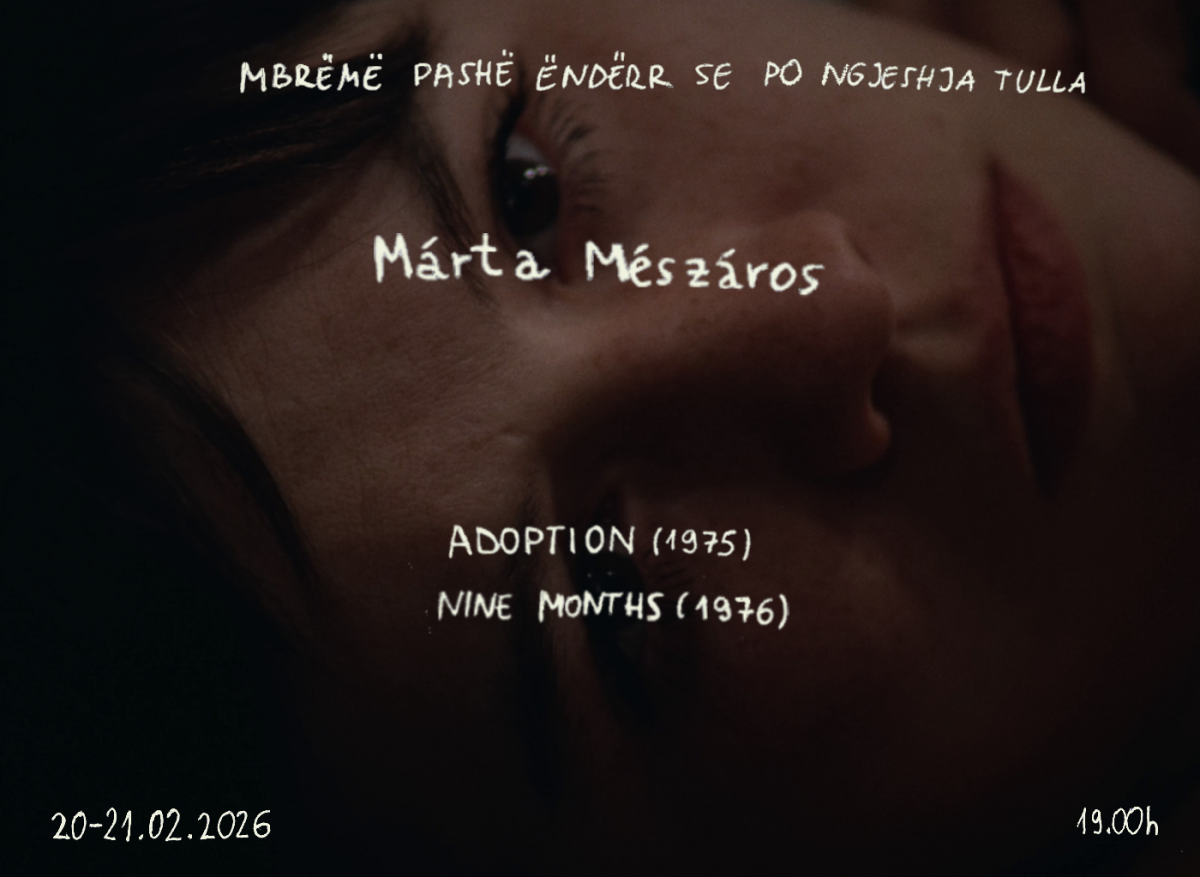
Women are the center of the image in the work of the Hungarian filmmaker Márta Mészáros. They’re calm. Rebellious. Searching for their autonomy. Some of them are mothers working in factories. Others dream of becoming mothers. Mészáros is committed to portraying implacable, self-determined women within the confines of patriarchy. The director draws them together in the course of their arduous tasks, which take place in factories, houses, restaurants and state institutions in 1970s Hungary. With an attentive gaze, the protagonists are framed in proximity to each other as their lives unfold through contradictions, marked by labour, motherhood, and other systemic political pressures that cause a complex sense of alienation that informs their search for autonomy but doesn't define it. The complexity of the characters is portrayed in a profoundly naturalistic way that it may seem to the viewers that they are not actors, as if Marta had observed their gestures and struggles and then captured them with her camera. In an interview given in 2019, Mészáros described her female characters as strong but lonely. Indeed, ambivalence in behavior and emotions crafts each shot. Their personalities are documented by cold, distant behaviors as well as restraint, resembling the spaces they inhabit, which are not just symbolic settings but are also portrayed as sites of tension.
The programme I Was Pressing Bricks in My Dreams Last Night brings to Kosova for the very first time two realist dramas by Márta Mészáros. Adoption (1975), a feature film, was both the first Hungarian film shown in the Official Competition of the Berlinale Film Festival and the first film by a female director to win the Golden Bear. The film follows Kata, a middle-aged woman who lives alone, works in a factory, and develops a friendship with troubled teenager Anna, who lives in a state institution for young people. Their unconventional relationship develops as they’re both navigating their dreams, decisions, and love lives. Kata has reached a point in her life where she wants to become a mother. She is in love with Joska, a married man with children who loves her but is unwilling to leave his wife and family. Anna has a boyfriend, but her family won’t approve of their marriage. As the characters grow closer, the director focuses on showing the ups and downs in their relationship and their care for each other, in the face of a society that is constantly disapproving of daring women. A similar structure tracks the life of July, a young worker in Nine Months (1976) who has just started her job at a brick factory, where she is immediately pursued by her coworker, Bodnar. He quickly falls in love with July and proposes, unaware that she has a kid out of wedlock. On the one hand, July studies agricultural engineering and is truly self-sufficient. Even though she agrees to marry him, she doesn’t quit her studies and is devoted to her son. Bodnar, on the other hand, is a traditional man who constantly demands July’s attention and wants to have full control of her. In the end, she breaks up with him and gives birth to the child on her own. The film’s ending is widely read as a feminist act where the protagonist favors her autonomy and dignity despite the hardships that her choices afford her and against the patriarchal structures that seek to discipline her.
This programme is curated with the help of the London-based curator Elizabeth Dexter and will be screened on February 20-21, 2026, at Kino Armata. The program starts at 19.00 and is free and open to all.